Matthias Mainz
Präpariertes und unpräpariertes Piano/Live-Processing
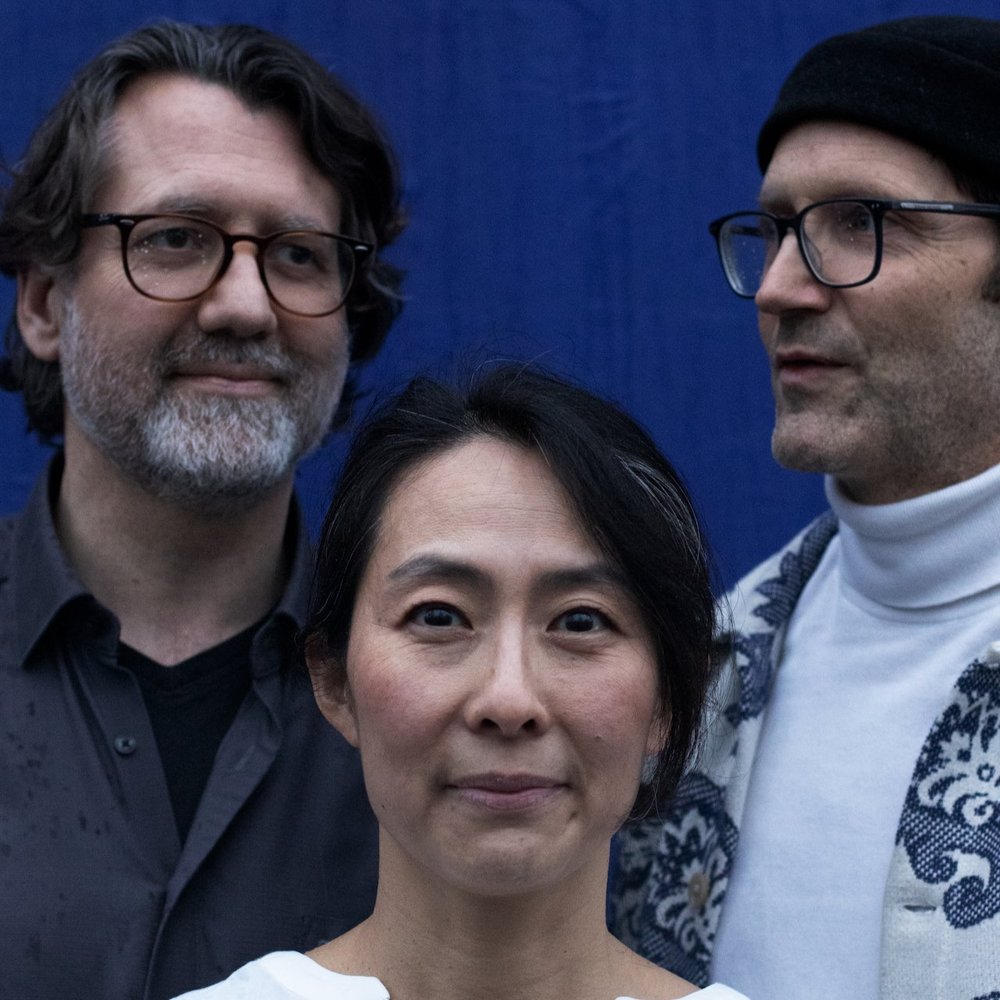
In Song Of Mu’s improvised, often hour-long sets, trance-like moments alternate with reduced, post-romantic and free jazz-like eruptive piano playing, with minimalist electro-acoustics and even traces of Krautrock.
SongOfMu’s music develops as a transformation of playing and listening in the paradoxical state of both-and stylistic borrowings amidst a completely independent, closed trio sound.
The Korean mu stands for meanings such as wind, dance or nothingness, perhaps like the indeterminate moment before a note is struck.
Bo-Sung Kim – Janggo/Jing/Kkwaenggwari
Matthias Mainz – Prepared and unprepared piano/live processing
Oliver Potratz – Double bass/electric bass/electronics
Präpariertes und unpräpariertes Piano/Live-Processing

Janggo/Jing/Kkwaenggwari

Kontrabass/E-Bass/Elektronik
In January 2024, Song Of Mu will come together for two sessions at the Berlin apartment of American vibraphonist David Friedman in search of a new trio sound combining Korean percussion, prepared piano and double bass.
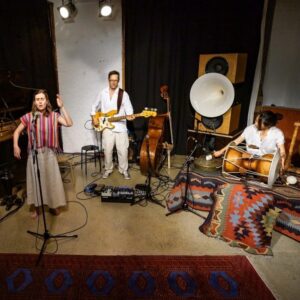
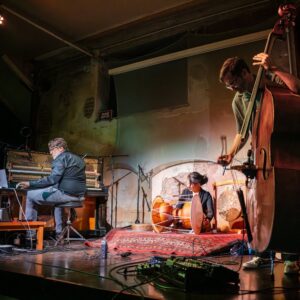
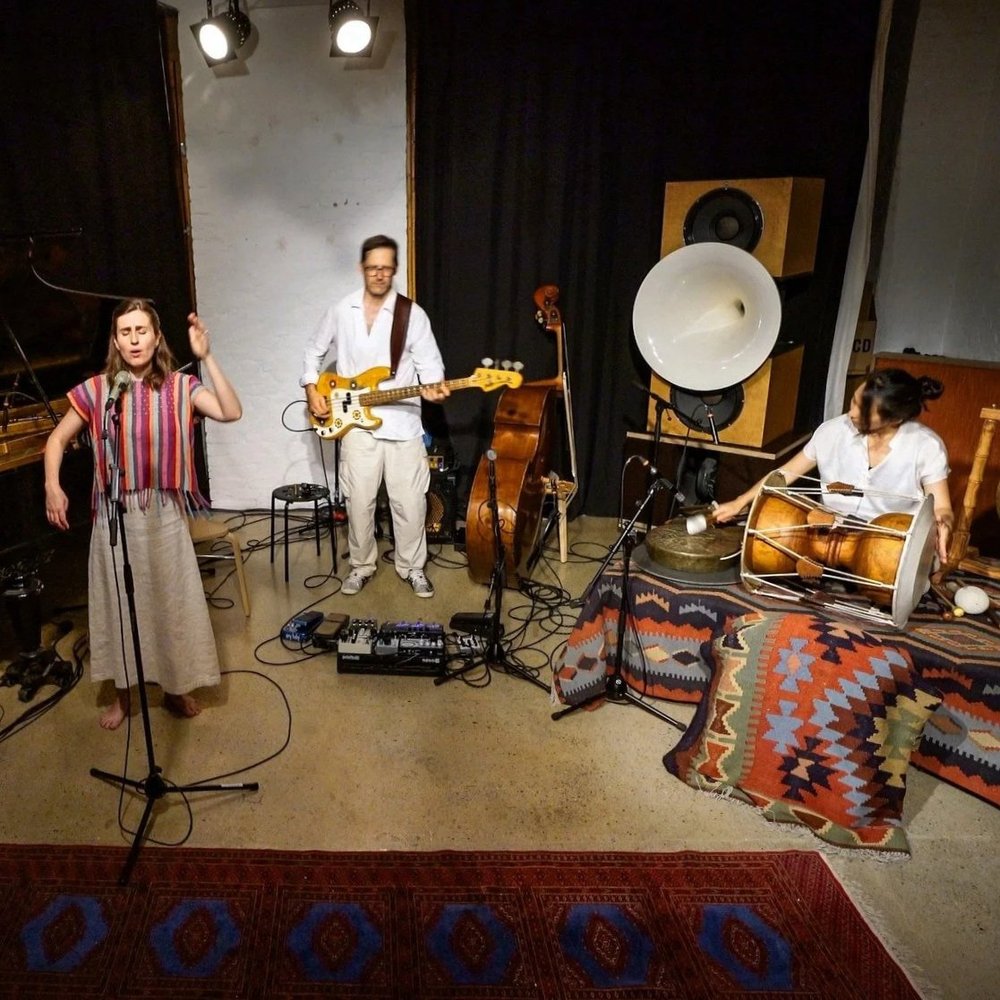
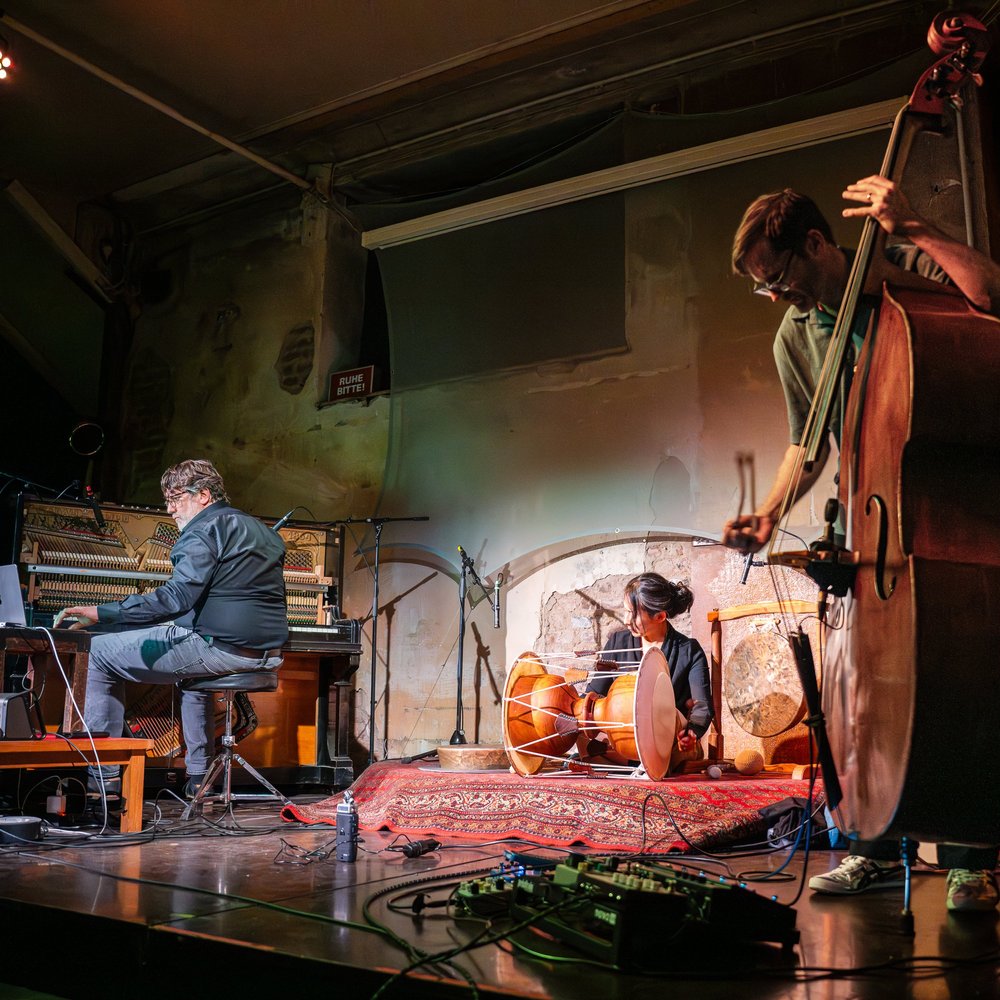
Since then, Korean percussionist Bo-Sung Kim, bassist Oliver Potratz and pianist Matthias Mainz have been defining their multi-stylistic communication between series of laborious recording sessions and studio concerts in trios and quartets, inspired by musical guests.
While Mainz and Potratz bring otherwise incompatible musical worlds into a common flow between acoustic, electrified and electronic settings, Kim activates the entire spectrum from noise sounds to improvisational impulses to hypnotic rhythm tracks on a traditional Korean setup consisting of the double-skinned janggo and the gongs jing and kkwaenggwari.
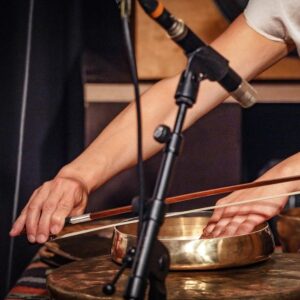
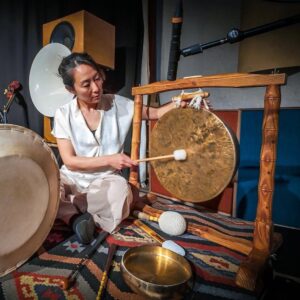
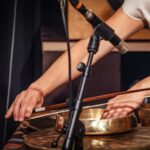
Bo-Sung Kim plays the double-sided hourglass drum janggo and the gongs jing and kkwaenggwari with an understanding of pulse that stems from Korean gugak music. She applies her playing techniques, which originate in traditional contexts, in noisy actions on wood, skin and metal, partly like a sound researcher interpreting Cage. Then again, for SongOfMu, she creates a rhythmic foundation that, in its energetic reduction, is more reminiscent of Jackie Liebezeit’s work for CAN than of traditional jazz or free jazz contexts.
Oliver Potratz positions his double bass and electric bass in SongOfMu with ease between acoustic and electronic sound, between avant-garde and free jazz modes, playing with minimalist groove fragments, jazz and noise, and at times swinging up to the hint of a soloistic, distorted electric guitar.
Matthias Mainz’s playing on prepared and unprepared grand piano alternates between percussive minimalist ideas and stylistic outbursts from the 20th-century collection of jazz, minimal, free jazz and new music. His live processing of the grand piano and the impulses of his fellow musicians throws an electronic arc around the musical flow of ideas in SongOfMu as a counterpart.